September 22, 2026
What Happens When Product Data Changes After You Publish It?

Chris Johnson
CEO
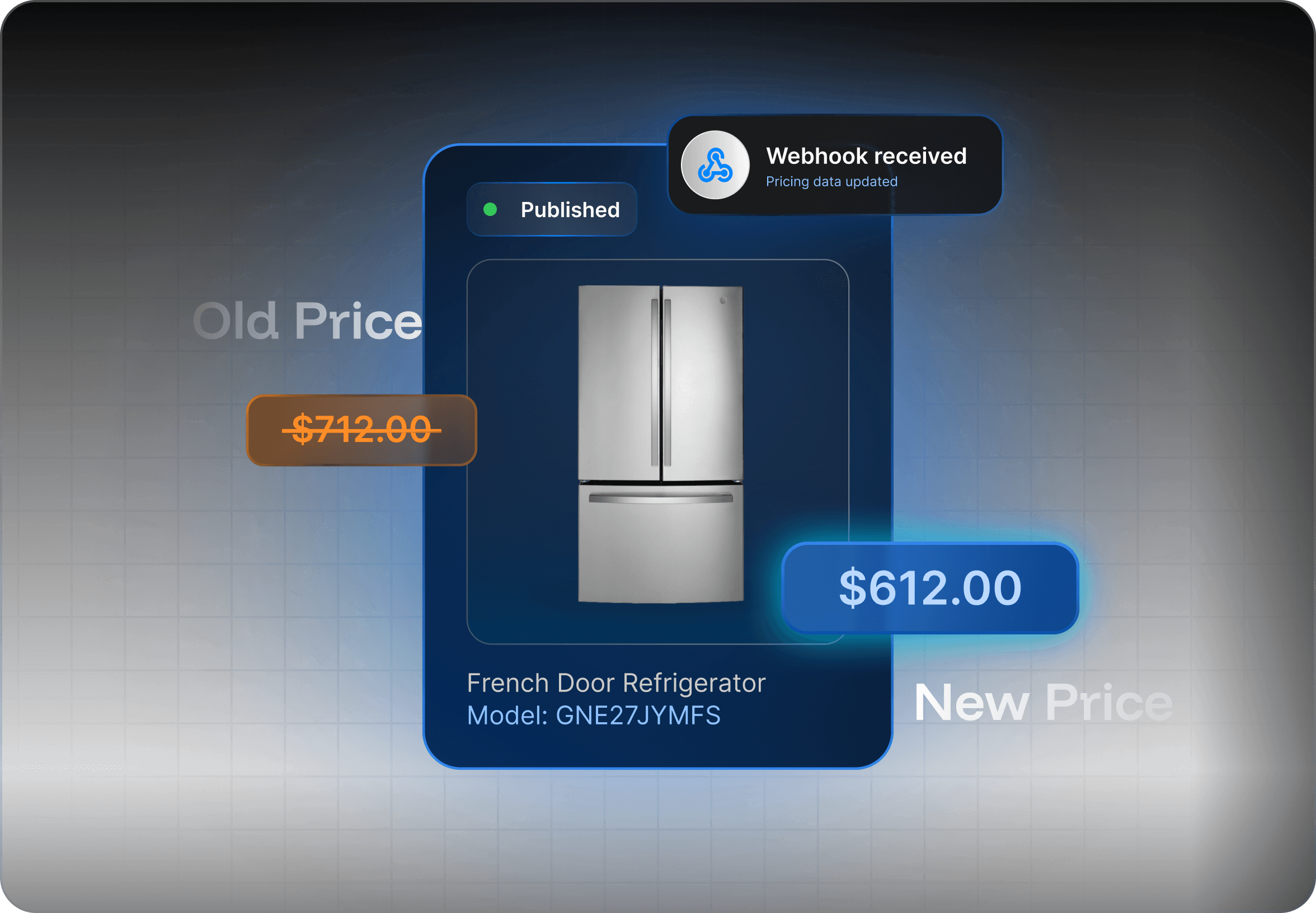
Publishing a product listing can make a catalog feel finished. However, for appliance, furniture, and mattress retail businesses, the product information keeps changing throughout its lifecycle. Manufacturers revise prices, promotions, and product status long after retailers add a product to their systems.
For example, a refrigerator goes live on your website with the correct price, dimensions, and energy guide. Six weeks later, the manufacturer changes the Promotional Minimum Advertised Price (PMAP) or product status. If your systems don't detect the changes, inaccurate information can keep appearing across your website, Point of Sale (POS), and Enterprise Resource Planning (ERP) systems.
Catalog accuracy therefore depends on more than getting the listing right on the day it is published. Retailers also need a reliable way to learn when product data changes. Before comparing scheduled checks with webhooks, it helps to understand how much product information can change after launch.
Product Data Keeps Changing After Launch
A one-time import gives a retailer a starting catalog. Keeping the catalog accurate is an ongoing job that lasts for as long as the products remain available. Several types of product information may require updates after a product is published:
Pricing: Manufacturers may change the Minimum Advertised Price (MAP), PMAP, Manufacturer’s Suggested Retail Price (MSRP), or retailer cost. Retailers need the latest figures to display accurate prices and protect their margins.
Lifecycle Status: A product may move from coming soon to active when it launches. Later, the manufacturer may mark the product as discontinued or replace it with a newer model.
Rebates and Promotions: Manufacturer promotions have specific start and end dates. Rebate amounts, eligible models, and other requirements may also change during the promotional period.
These updates don’t all happen at the same rate. These updates don’t all happen at the same rate. Pricing and availability may change frequently. Manufacturers may update an energy guide or correct a capacity measurement less often, sometimes without a regular schedule or direct notification to retailers.
Because the same product information often feeds multiple business systems, even one missed update can spread beyond the original catalog. The website, POS system, and other connected platforms may all continue displaying outdated information that is no longer valid.
Outdated Data Spreads Across Every System
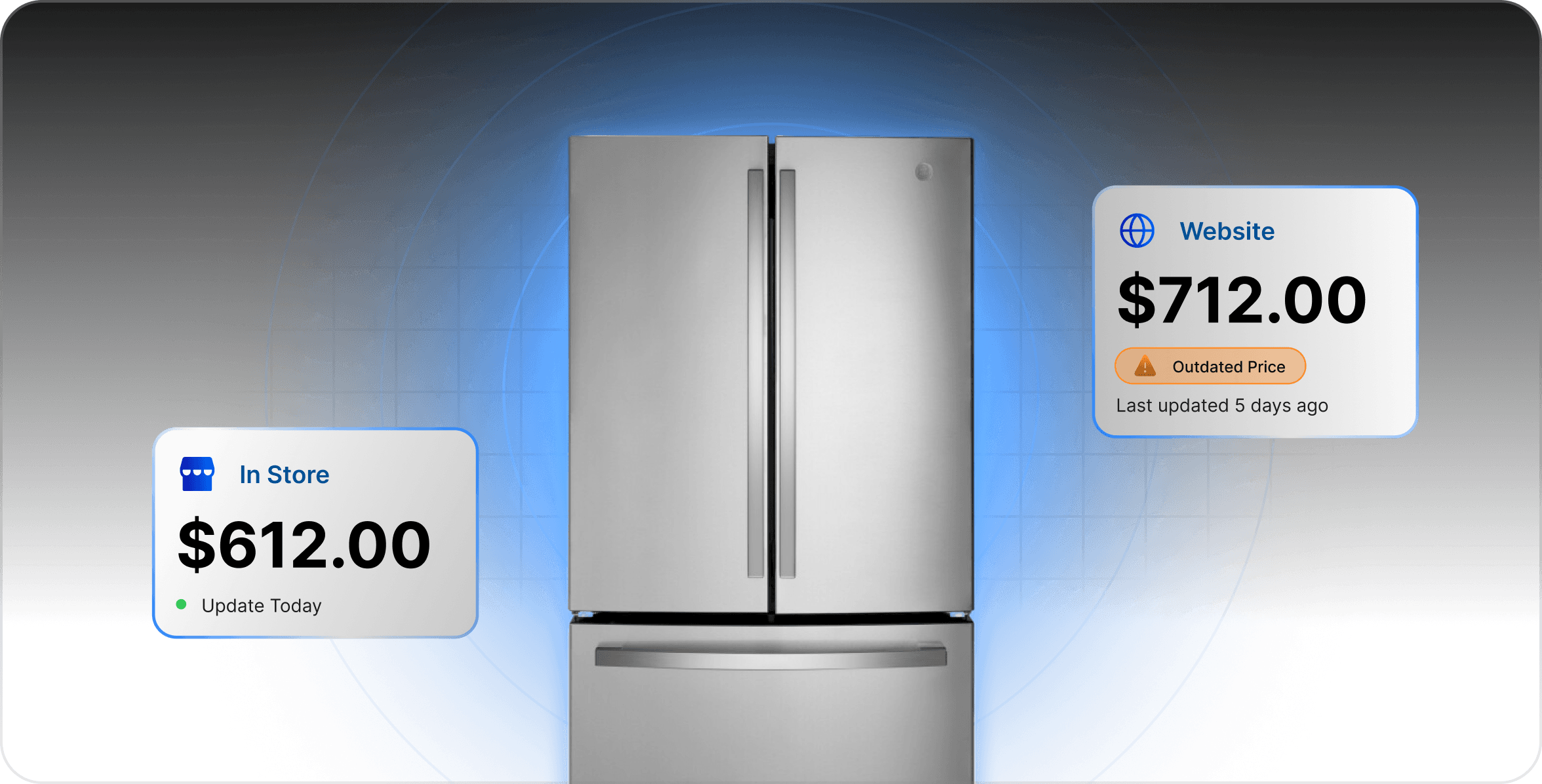
Product data inconsistency often becomes visible only when a shopper and a salesperson compare two screens and find different answers. By that point, the product information may have been inaccurate for days or weeks.
Across a retail catalog, outdated product data can create problems during everyday sales and fulfillment work. Retailers may encounter situations such as:
Expired prices or promotions still displayed online: A manufacturer promotion may have ended, but the retailer’s website still shows the discounted price. Staff must then honor an outdated offer or explain the price difference to the customer.
Discontinued models that still accept orders: A customer may complete a purchase before staff discovers that the manufacturer no longer supplies the model. The retailer then has to cancel the order, issue a refund, or help the customer choose a replacement.
New models missing from the website: A manufacturer may release a new product, but the retailer’s online catalog doesn’t list it for several weeks. Shoppers can’t find the model online, even when the sales team already knows it’s available.
Different information across sales channels: The website may show one price or specification while the POS system shows another. Sales staff must stop and verify which information is correct while the customer waits.
Each error may be manageable on its own. Across hundreds or thousands of products, however, retail teams can spend significant time resolving pricing disputes, correcting listings, processing returns, canceling orders, and answering customer questions.
To understand why outdated records can remain active for so long, it helps to look at how most retail systems check for product changes.
How Webhooks Help Keep Product Data Up to Date
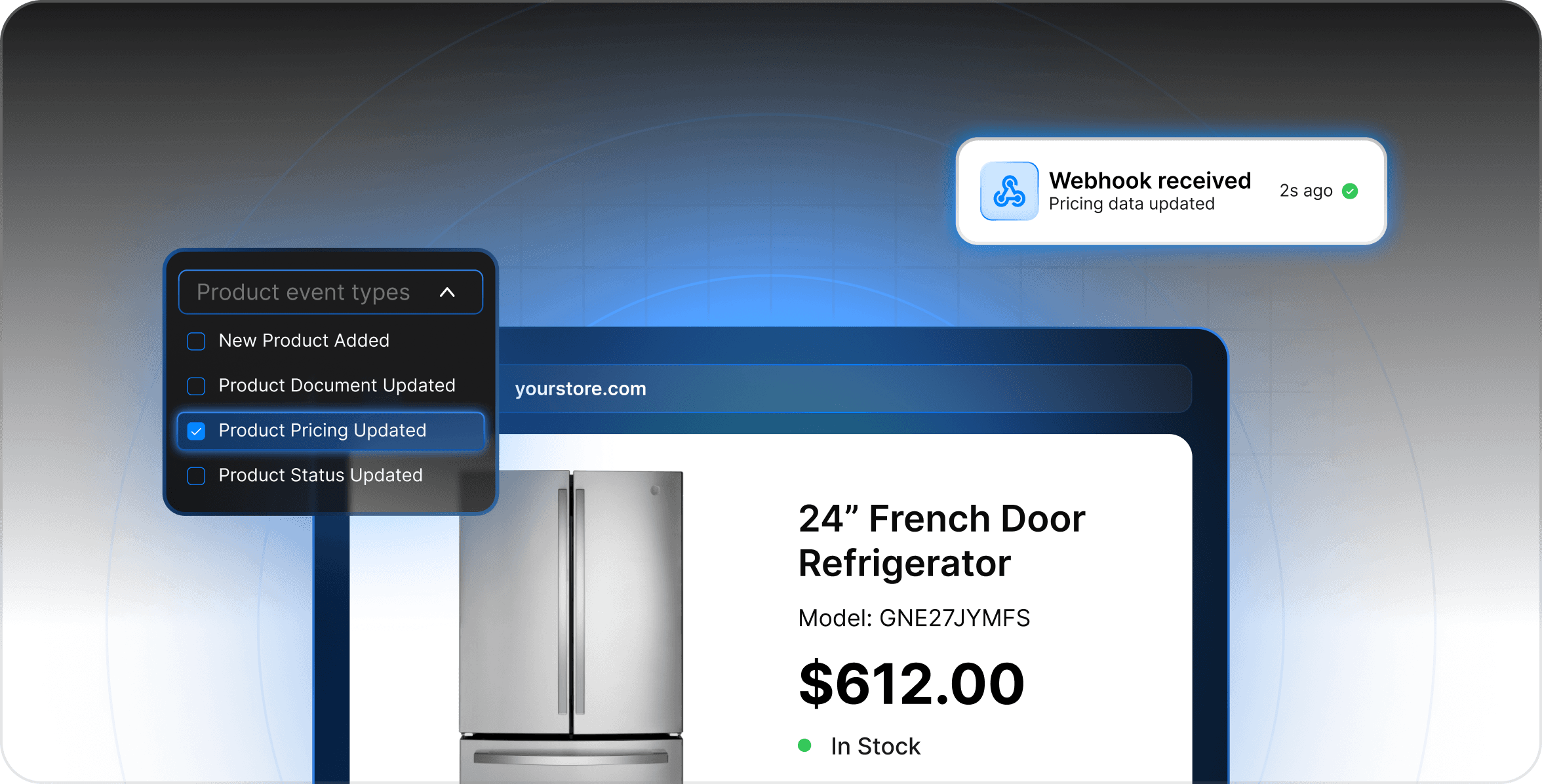
Product information can change after a retailer adds it to a catalog. However, the retailer’s website and other business systems won’t know about the change unless they receive the new information. A webhook helps deliver that update.
When a supported product change happens, the webhook sends a message to the retailer’s system. The message may include updated product information or identify which product changed. The retailer’s system can then process the update based on the rules the business has set.
For a more detailed explanation of how a webhook works, read: What Is a Webhook? How It Works for Product Data Updates.
One Change Can Reach Every Connected System
Retailers often use the same product information across their eCommerce website, POS system, and ERP system. When a product changes, each system needs the same updated information.
For example, suppose a manufacturer lowers the price of a refrigerator. A webhook alerts the retailer’s system to the price change. The retailer’s integration can then send the new price to every connected system.
When the retailer’s integration is configured to process webhook updates automatically, staff don’t have to update the price separately in every connected system. Customers are also less likely to see one price online while sales staff see another price in the store.
Retailers Decide How to Use Each Update
A webhook lets the retailer know when product information changes. The retailer can then choose whether to publish the update automatically or review it first.
For example, a new price may go live immediately. Other product data changes may need review before the retailer adds them to its website. When a manufacturer discontinues a product, the retailer may need to check its remaining inventory before deciding when to update the product’s status across its sales channels.
Webhooks help retailers receive product updates sooner while keeping them in control of what appears on their website and other connected systems.
Keep Your Product Catalog Current With Skulytics
Keeping product information accurate shouldn’t require your team to monitor manufacturer websites, compare spreadsheets, and correct the same product across multiple systems.
Skulytics gives appliance, furniture, and mattress retailers access to structured product data from more than 400 brands. When pricing, availability, or product status changes, Skulytics Webhooks help retailers act on the latest information sooner.
When product updates reach the retailer’s systems sooner, customers and staff are less likely to encounter outdated listings or conflicting information across sales channels. Catalog teams can also spend less time finding and correcting errors after they appear.
For individual retailers, the Skulytics plan starts at $100 per month. The plan includes access to the full brand catalog, 100,000 monthly API uses, and webhooks. Retailers can also begin with a 14-day free trial that includes 5,000 API calls.
Explore Skulytics pricing or contact the team to see how Skulytics can support your product data workflow.
