September 1, 2026
How a Mattress API Simplifies Complex Product Catalogs

Chris Johnson
CEO

Choosing a mattress from an online store may seem simple from a customer's perspective, but behind that experience lies a much more complex product catalog to manage. A single mattress can come in different sizes, comfort levels, dimensions, prices, specifications, and availability.
As more models, brands, and collections are added to a mattress store, the amount of product data retailers need to manage grows. A mattress Application Programming Interface (API) can simplify product catalog management by providing structured product data that helps retailers organize related products and makes complex catalogs easier for their systems to manage.
Why Mattress Catalogs Become Complicated
Mattress catalog complexity becomes clearer when you look at how quickly product variations can multiply. Imagine one mattress collection available in six sizes: Twin, Twin XL, Full, Queen, King, and California King. Add three comfort levels, such as Firm, Medium, and Plush, and those two attributes alone could create 18 possible combinations.
This is only an example, since the number of options varies by mattress model and manufacturer. Construction types, model tiers, pricing, and promotions can add even more variations. What shoppers see as a single mattress may represent dozens of individual product records behind the scenes.
Retailers need to keep those records accurate while ensuring every variation is linked to the correct mattress model. A Queen Firm and King Plush mattress may have different SKUs, dimensions, and prices while still belonging to the same mattress family.
Keeping those variations organized affects the entire shopping experience. Product pages need to show the correct options, search and filtering need to recognize details such as size and comfort level, and product information needs to remain consistent across eCommerce, Point of Sale (POS), Enterprise Resource Planning (ERP), and other retail systems.
What Is a Mattress API?
An API is a way for two software systems to communicate and exchange information. Instead of manually moving information from one system to another, an API allows one system to request data from another source in a structured format.
A mattress API applies this process specifically to mattress product data. It gives retailers and retail software platforms a way to retrieve information such as product names, SKUs, sizes, dimensions, comfort levels, construction types, specifications, images, pricing, and other product attributes.
For complex mattress catalogs, an API can also provide structured information about different product variations. That structure helps retail systems recognize individual product records while keeping related sizes, comfort options, and other variations organized within the correct mattress family.
The API makes that product data available, while retailers remain in control of how it is used. They can determine how the information is reviewed, processed, and used across their systems, including online stores and POS systems.
How a Mattress API Works
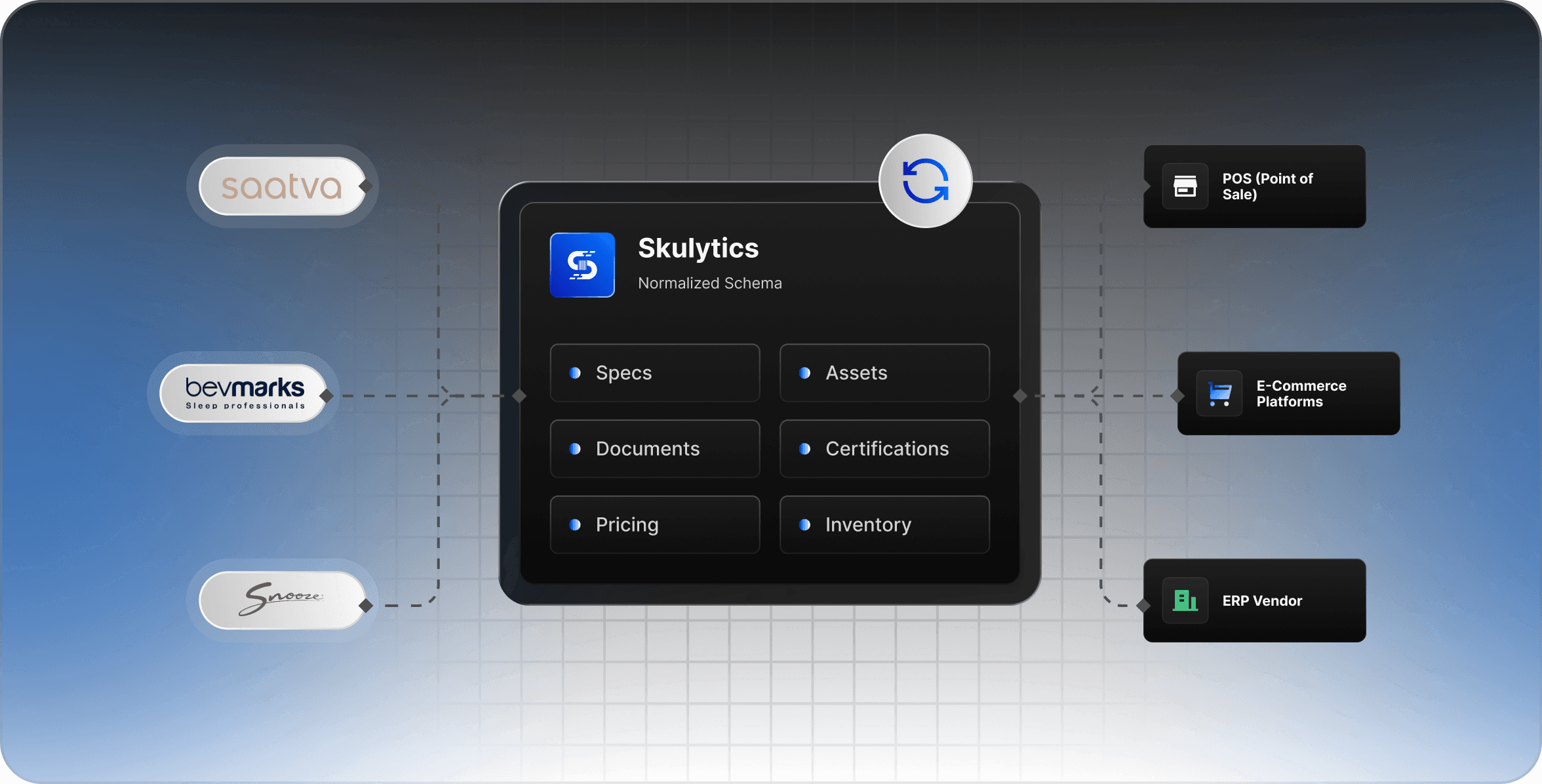
A mattress API does more than provide a list of products. Before retailers can use manufacturer data, information from different sources needs to be collected, organized into a consistent structure, and made available in a format their systems can request.
The exact process varies by API provider, but it generally involves the following stages.
Collect Product Data From Manufacturers
Mattress manufacturers may provide their product information in different formats and through different sources. The product data provider collects this information and maintains connections to those manufacturer sources on the retailer's behalf. Retailers can then retrieve product information from a single source instead of building and maintaining a separate data connection for each mattress brand they carry.
Normalize Data From Different Brands
Manufacturers don't always describe or organize products in the same way. Dimensions, comfort levels, construction types, materials, and other specifications may follow different formats or naming conventions across brands.
Normalization organizes those differences into a more consistent structure, making product attributes easier for retail systems to process across multiple manufacturers while preserving brand-specific information where necessary.
Keep Manufacturer Data Up to Date
Retailers may already have access to product information through manufacturer websites, dealer portals, files, or other sources. The challenge is keeping track of changes as manufacturers update their catalogs.
An API provides a more direct way for retailer systems to retrieve the latest available product data. Depending on the provider and integration, retailers can receive updates more frequently without repeatedly checking manufacturer sources or manually updating their catalogs.
Deliver Product Data Through the API
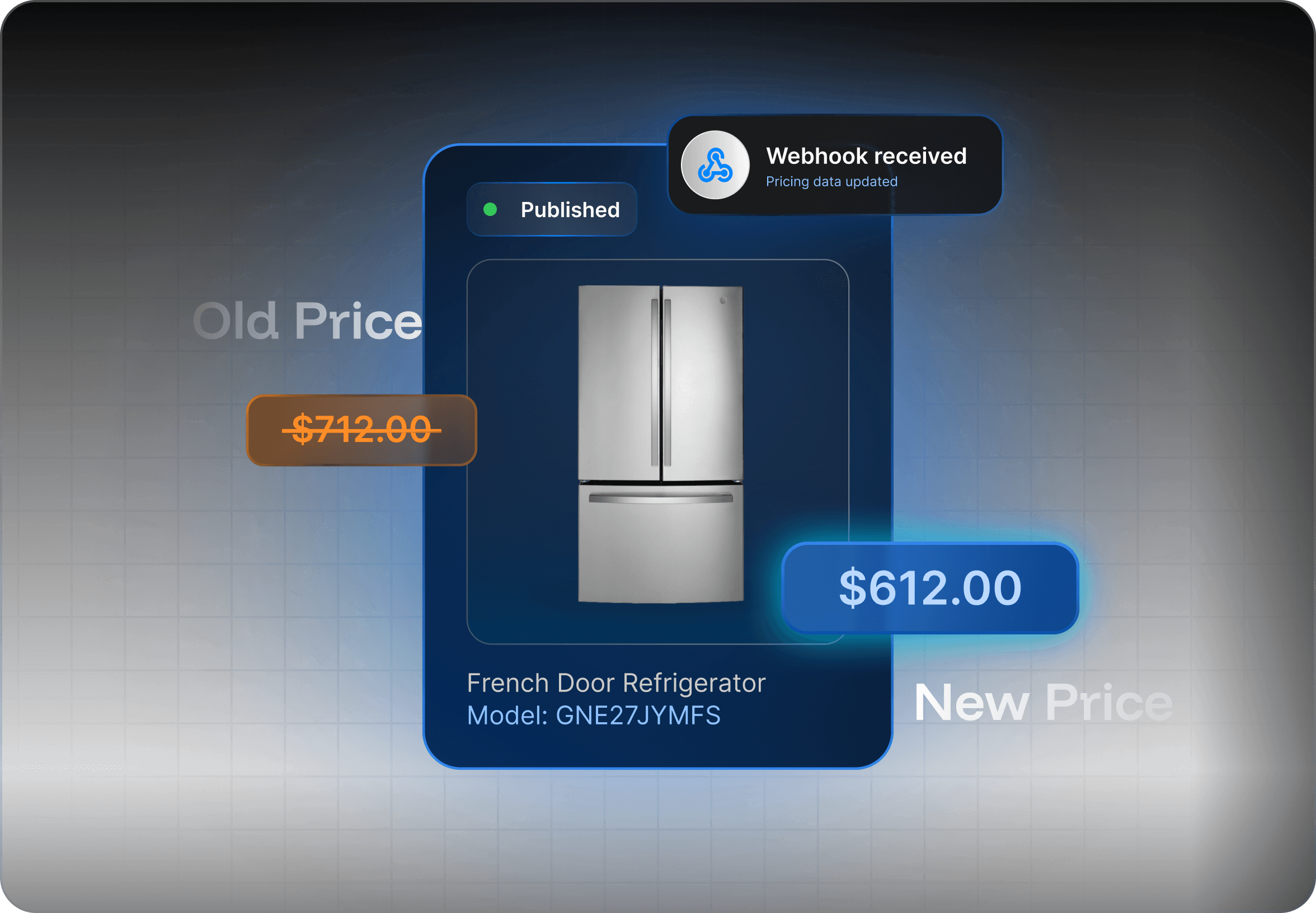
Once product data is structured and made available through the API, retailers can retrieve the information their systems need. Depending on the provider and integration, updates may be retrieved on a schedule or communicated via webhooks.
At the same time, retailers remain in control after receiving the data. Their own integration determines whether product information is reviewed, stored, displayed online, or used across other retail systems.
What Changes After Implementing a Mattress API?
The impact of a mattress API becomes clearer in day-to-day catalog work. With manufacturer data available in a more consistent format, retailers can reduce several manual tasks that become harder to manage as their mattress assortments grow.
Fewer Manual SKU Mappings
Each mattress variation may have its own SKU, but retailers still need to know which records belong to the same model or collection. When that information is provided in a structured format, teams can spend less time manually matching individual SKUs and organizing each variation under the correct mattress model.
More Consistent Size and Comfort Filters
Different manufacturers may use different names or formats for similar mattress attributes. Normalized product data makes it easier for retailers to build consistent filters for options such as Twin, Queen, Firm, Medium, or Plush, so shoppers can narrow down products without the retailer having to manually standardize every attribute first.
Fewer Duplicate Product Pages
When mattress variations are treated as unrelated records, retailers may end up creating separate or duplicate-looking pages for products that belong to the same family. When those variations are clearly identified as part of the same mattress model, retail systems can group them more accurately and reduce the risk of unnecessary duplicate pages.
Faster Onboarding for New Mattress Brands
Adding another mattress brand doesn’t have to mean starting a completely new catalog process. If the manufacturer's data is already available through the API, retailers can bring its products into their existing workflow without first collecting, reformatting, and organizing the entire catalog manually.
Easier eCommerce and POS Sync
The same mattress data may be used across an online store, POS, and other systems. A consistent data source helps keep product details aligned, while retailers control how the data moves between systems.
Manage Mattress Product Data with Skulytics
Managing a complex mattress catalog becomes easier when retailers have a reliable source for the product data behind it. Skulytics is a product data platform that helps retailers and retail software providers access structured manufacturer product data through a single API.
For mattress catalogs, Skulytics provides product information that can support different models, sizes, comfort levels, specifications, images, and other product attributes. Retailers can use the API as the foundation for product data across their eCommerce, POS, ERP, and other systems while remaining in control of how that information is processed and presented to customers.
No more building and maintaining a separate product data process for every mattress manufacturer. Skulytics brings structured product data from multiple brands together through a single API integration. Explore the Skulytics Product Data API to learn how structured product data can support your growing mattress catalog.