July 21, 2026
How a $100 Monthly Investment Can Benefit Your Appliance Business

Chris Johnson
CEO

Every month, appliance retailers receive a steady stream of product updates from manufacturers. Prices change, specifications are revised, new models replace old ones, product images are refreshed, and older products are discontinued. Every one of those changes eventually needs to be reflected in the retailer’s product catalog.
For retailers carrying products from dozens of appliance brands, product catalog management is a year-round responsibility. Keeping product information aligned with those changes requires far more than updating a few product listings.
Someone on the team first collects product updates from manufacturer emails, spreadsheets, supplier portals, or product feeds. Next comes the task of comparing the latest information with existing product records. Only then can the catalog be updated across the retailer’s website, marketplace listings, and other sales channels. The process quickly becomes part of the team’s daily routine, consuming valuable time that could otherwise be spent serving customers, improving marketing efforts, or growing the business.
When a $100 monthly product data automation subscription comes along, it’s natural to question whether it’s really worth the cost. The real question isn’t whether a $100 monthly subscription is expensive. It’s whether continuing to manage product data manually is already costing the business far more than that.
The real value isn’t measured by the monthly subscription price. It’s measured by the time, effort, and operational costs the business no longer has to absorb through manual product data management.
Manual Product Data Management Isn’t Free
Imagine starting the day by reviewing overnight product updates from Samsung and Whirlpool. Before lunch, product images for several refrigerators need to be replaced, and specifications for KitchenAid dishwashers need to be updated. Recently discontinued microwave models also need to be reviewed against the retailer’s remaining inventory. By the afternoon, another manufacturer publishes a revised product feed with updated pricing and new product launches, restarting the same workflow.
A single update isn’t difficult. The challenge is that manufacturers don’t publish any updates, and retailers don’t manage any brands. Every update must first be reviewed, verified, and applied across multiple systems before the catalog is fully up to date. Over time, the hours spent maintaining product data add up.
Managing an appliance product catalog requires continuous attention from those responsible for maintaining it. As product catalogs continue to grow, maintaining them often becomes too much for existing employees alone.
Hiring a dedicated employee to maintain product data may reduce the workload, but it also introduces another recurring expense. With hourly rates around $15–20, a full-time employee can cost approximately $2,400–$3,200 per month before considering benefits or additional staffing needs.
Whether retailers absorb the workload internally or hire additional staff, manual product data management carries a cost. The longer the catalog grows, the more time and resources are required simply to keep product information up to date.
Outdated Product Information Costs You Sales
Outdated product information affects far more than the appearance of your catalog. It can reduce profit margins, increase product returns, create unnecessary customer service work, and ultimately cost your business sales. Different types of product information create different business risks when they aren’t updated promptly. Here are a few examples of how outdated product information could affect your business.
Outdated Product Specifications
Customers rely on product specifications to determine whether an appliance meets their needs. Dimensions, capacity, installation requirements, electrical specifications, and key features all play a role in their purchasing decision.
When this information is outdated or inaccurate, customers may receive a product that doesn’t fit their space or doesn’t meet their expectations. A refrigerator that won’t fit through a doorway or a dishwasher that doesn’t match the required cabinet opening can quickly turn into a costly return.
Beyond return shipping and restocking expenses, retailers also spend additional time handling customer inquiries, processing refunds or exchanges, and updating inventory records. Accurate product specifications help customers make informed decisions and reduce preventable returns.
Outdated Pricing
Specifications aren’t the only information that changes. Product pricing is one of the data points that change more often than many retailers realize. Manufacturers may adjust pricing, introduce promotional programs, or update pricing policies throughout the year. If your catalog isn’t updated promptly, you could end up selling products at below-intended prices, reducing your profit margin with every sale.
On the other hand, listing products at prices higher than competing retailers can discourage customers from purchasing. Keeping pricing current helps retailers remain competitive while protecting profitability.
Outdated Product Status
Product availability can create similar problems. New models are introduced, existing products are discontinued, and replacement models take their place. If discontinued products remain listed as available, customers may place orders for products that can no longer be fulfilled. Customer service teams must then explain the situation, recommend alternative models, update the order, or process cancellations and refunds.
These unnecessary interactions increase operational workload and can leave customers with a poor buying experience. Keeping product status up to date helps prevent these situations and ensures customers see only products that are currently available.
The challenge isn’t understanding why product information should stay current; it is keeping up with thousands of manufacturer updates without turning catalog maintenance into a full-time job.
What Does $100/Month Get You?
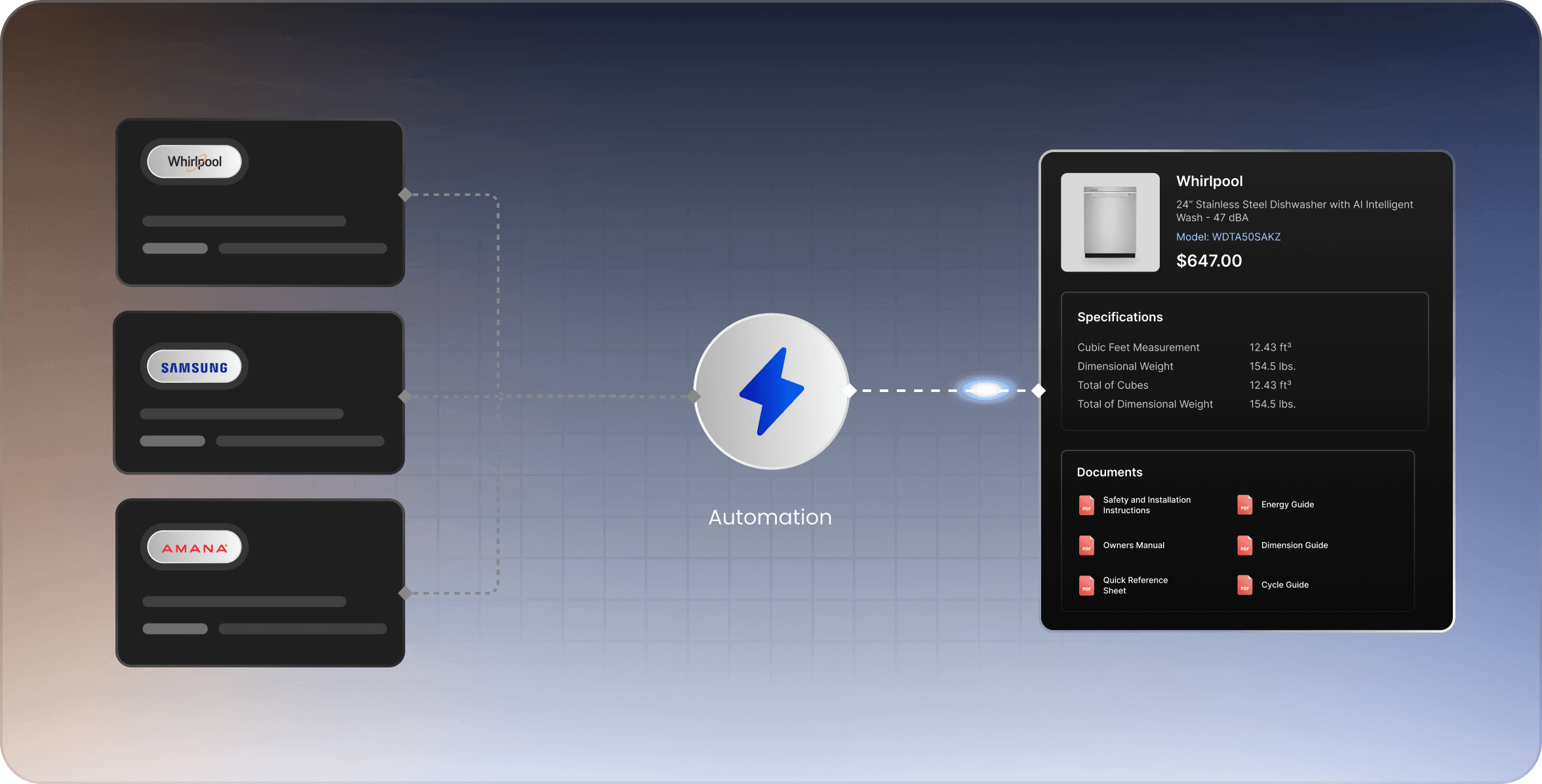
If outdated product information leads to lost sales and maintaining it manually requires hours of repetitive work, the obvious question becomes: is there a better way?
Instead of collecting updates from each manufacturer individually, retailers can rely on a centralized source of structured product data that automatically stays in sync with manufacturer updates.
Starting at $100 per month, the Skulytics Individual Plan helps retailers replace hours of repetitive catalog maintenance with a centralized source of appliance product data. This subscription includes immediate access to the Skulytics Product Data API, which allows retailers to retrieve appliance product data from more than 300 authorized appliance brands without additional per-brand licensing fees.
As manufacturers publish updates, product information remains synchronized without requiring teams to manually monitor every announcement. Specifications, pricing, product media, and product lifecycle information remain synchronized through a single centralized source of product data.
With every team working from the same up-to-date product information, marketing campaigns can launch with current pricing, sales teams can rely on accurate specifications, and customers can shop with greater confidence. Instead of constantly verifying product information, retailers can focus on running and growing their business.
Compared with spending thousands of dollars each month on manual catalog maintenance or absorbing the hidden costs of outdated product information, a $100 monthly investment can help retailers spend less time maintaining product data and more time serving customers, improving operations, and growing the business.
The Individual Plan is only one of several pricing options available at Skulytics. Businesses can choose the plan that fits their operational needs. Explore Skulytics’ pricing plans to compare available options, or contact the team to find the solution for your business.
For many retailers, the question isn’t whether they can afford a $100 monthly subscription; it’s whether they can afford to keep managing product data without one.


