September 15, 2026
API vs. Webhook: What's the Difference?

Chris Johnson
CEO

Appliance, furniture, and mattress retailers rely on product data across multiple systems, and that information is not static. New products are added, prices change, statuses change, and existing records are updated over time.
Application Programming Interfaces (APIs) and webhooks both help retailers move product information between software systems. They can deliver updated information that retailers use across eCommerce websites, Point of Sale (POS) systems, Enterprise Resource Planning (ERP) platforms, and other parts of their technology stack. Keeping those systems supplied with current product data can help reduce gaps between what customers see online and what retail teams see internally.
APIs and webhooks can both work with product data, but they exchange that information differently. The main difference is who starts the exchange and when. With an API, your system requests the data when it needs it. With a webhook, the other system sends an update when a supported event occurs.
How Does an API Work?
An API allows your system to request specific product information from another data source when it needs it. Your system sends a request, and the API returns the available information in a structured format that your system can process.
For example, your website may need the latest information for a refrigerator SKU. Your system requests that product record, and the API returns details such as pricing, dimensions, specifications, images, or availability. After receiving the product data, you decide how to use it within your system.
The exchange happens only when your system requests it. If you need updated information later, your system sends another request and receives the latest data available then. The important part is that your system starts the exchange. The API responds when your system asks for information.
How Does a Webhook Work?
A webhook uses a different communication model. Instead of your system requesting data, the data source sends an update when a supported event occurs.
For example, imagine a washer's price changes or a product is discontinued. When that supported event occurs, the data source sends the relevant update to your registered URL. Your system receives the information without repeatedly checking for updates.
After receiving the update, you decide what happens next. You can apply the new information immediately, review it first, or process it through your existing workflow. The key difference is that your system doesn't start the exchange.
API vs. Webhook at a Glance
APIs and webhooks can both support product data management, but they serve different purposes. Here is the simplest way to compare them:
API | Webhook | |
Who starts the exchange? | Your system sends a request | The data source sends an update |
When does it happen? | When your system requests data | When a supported event occurs |
Best for | Retrieving product data on demand | Receiving change-based product updates |
Typical use case | Getting the latest product details for a specific SKU | Receiving a pricing, status, or product update |
Repeated checking | Yes, if your system needs to check whether data has changed | No repeated checking is needed for supported events |
The data it returns | Complete or specific product information, depending on the endpoint | Information related to the event, depending on the payload |
When to Use an API
Use an API when your system needs specific product data at a particular moment. Common examples include:
Loading a product page
Your website may request the latest price, specifications, images, or availability for a specific SKU.
Onboarding new products
When adding a new brand or category, your system can request complete product records for the products you need.
Filling gaps in your catalog
If product information is missing or outdated, your system can request the latest available record.
When to Use a Webhook
A webhook makes more sense when you need to know when product data changes without repeatedly checking for updates.
For example, you may want your system to receive an update when a new product is added, pricing changes, a product status changes, or an existing product is updated. With a webhook, your system can reduce repeated API checks by receiving updates when supported events occur. The webhook delivers the supported update when the event occurs.
Webhooks become especially useful for large catalogs, where frequent checks across hundreds or thousands of SKUs can create many unnecessary requests.
Using APIs and Webhooks Together
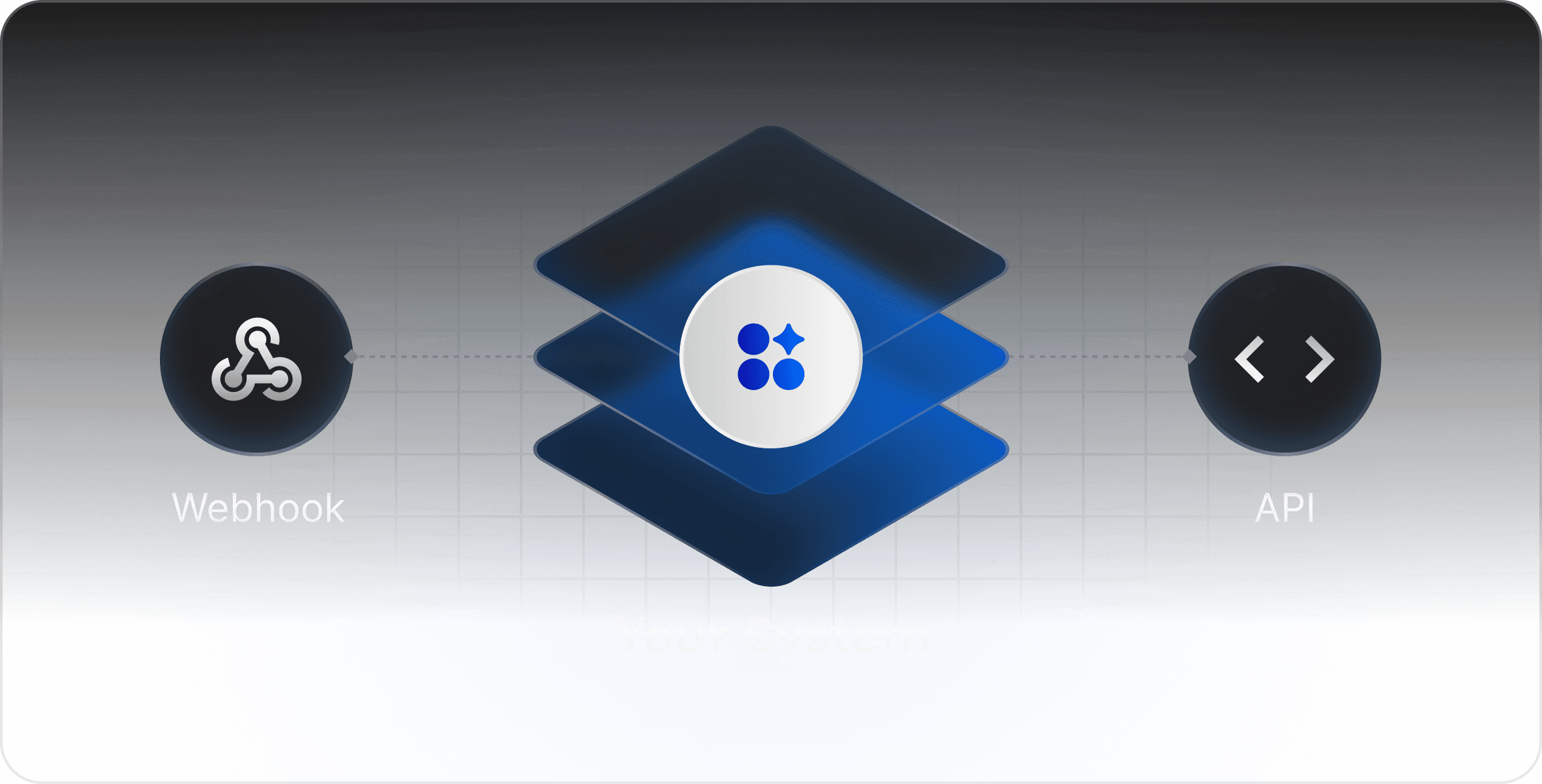
APIs and webhooks handle different parts of product data management, but using one doesn't mean leaving the other behind. A webhook can notify or deliver data when a supported product change occurs, while an API remains available whenever your system needs to retrieve product information on demand.
For example, a sofa’s price may change, and your system receives that update through a webhook. If your system later needs the sofa’s full product information, such as dimensions, fabric options, images, or specifications, it can request the latest record through the API.
Together, webhooks can handle event-driven updates, while APIs provide flexible access to product data whenever your system needs it.
Skulytics gives appliance, furniture, and mattress retailers access to both a Product Data API and Webhooks.
The Skulytics Product Data API provides structured manufacturer product information that your system can request when needed. Skulytics Webhooks deliver supported product updates to your registered system URL when selected events occur. Available events include new products, product updates, deleted products, pricing changes, and product status changes.
Use the API when your system needs product data on demand; use webhooks when you want supported changes delivered as they happen; or combine both based on your workflow.
Explore the Product Data API and Skulytics Webhooks, or contact the Skulytics team to discuss the right setup for your business.
